

WHITEBOX HONORS · FALL OF FREEDOMW
November 21, 2025
Touchstones
March 3, 2026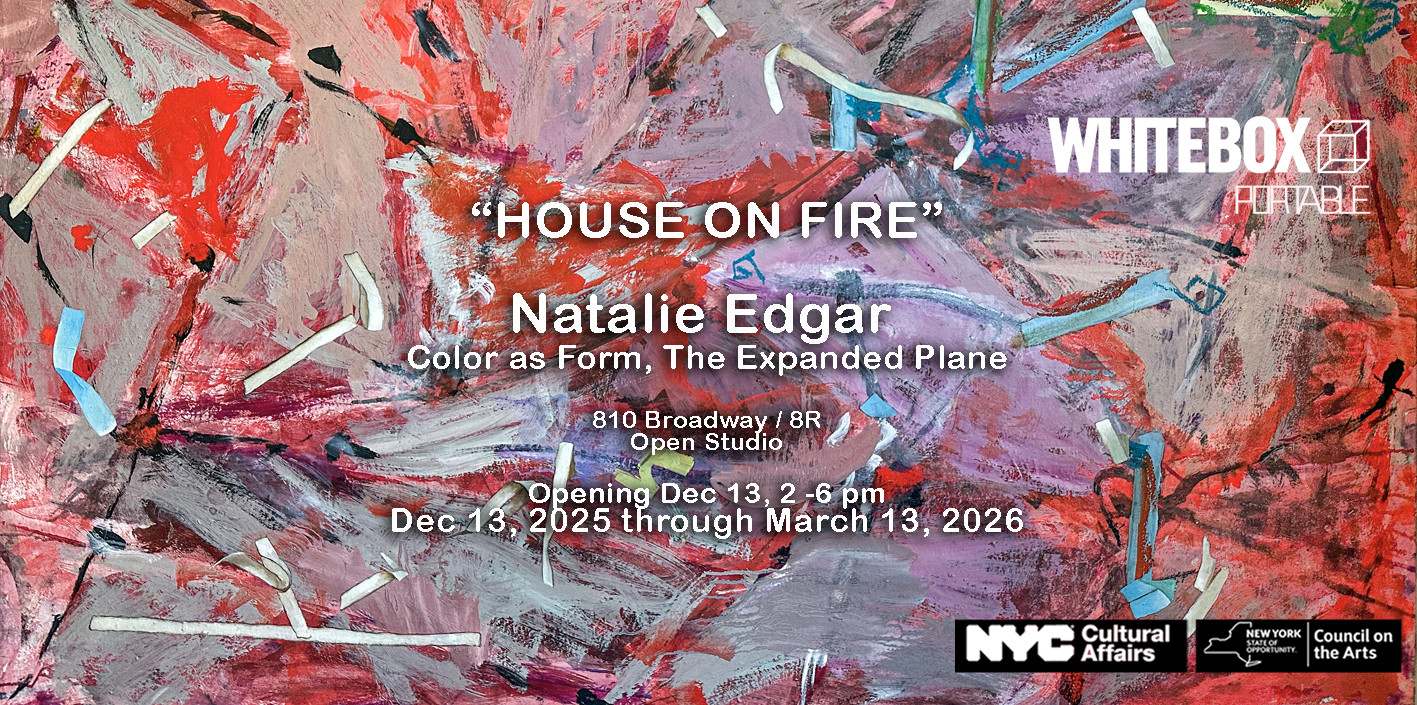
Natalie Edgar. Color as Form, The Expanded Plane
Opening Dec 13 - 2 - 6 pm
A Rigorously Curated Survey of Her 21st-Century Paintings, Presented In Situ
WBX Seminal Artists Series Program
Dec 13, 2025 through March 13, 2026
Thurs–Saturday 12–5 PM
Address: 810 Broadway, NYC
Advance RSVP Required to info@whiteboxny.org and/or 917 771 2230
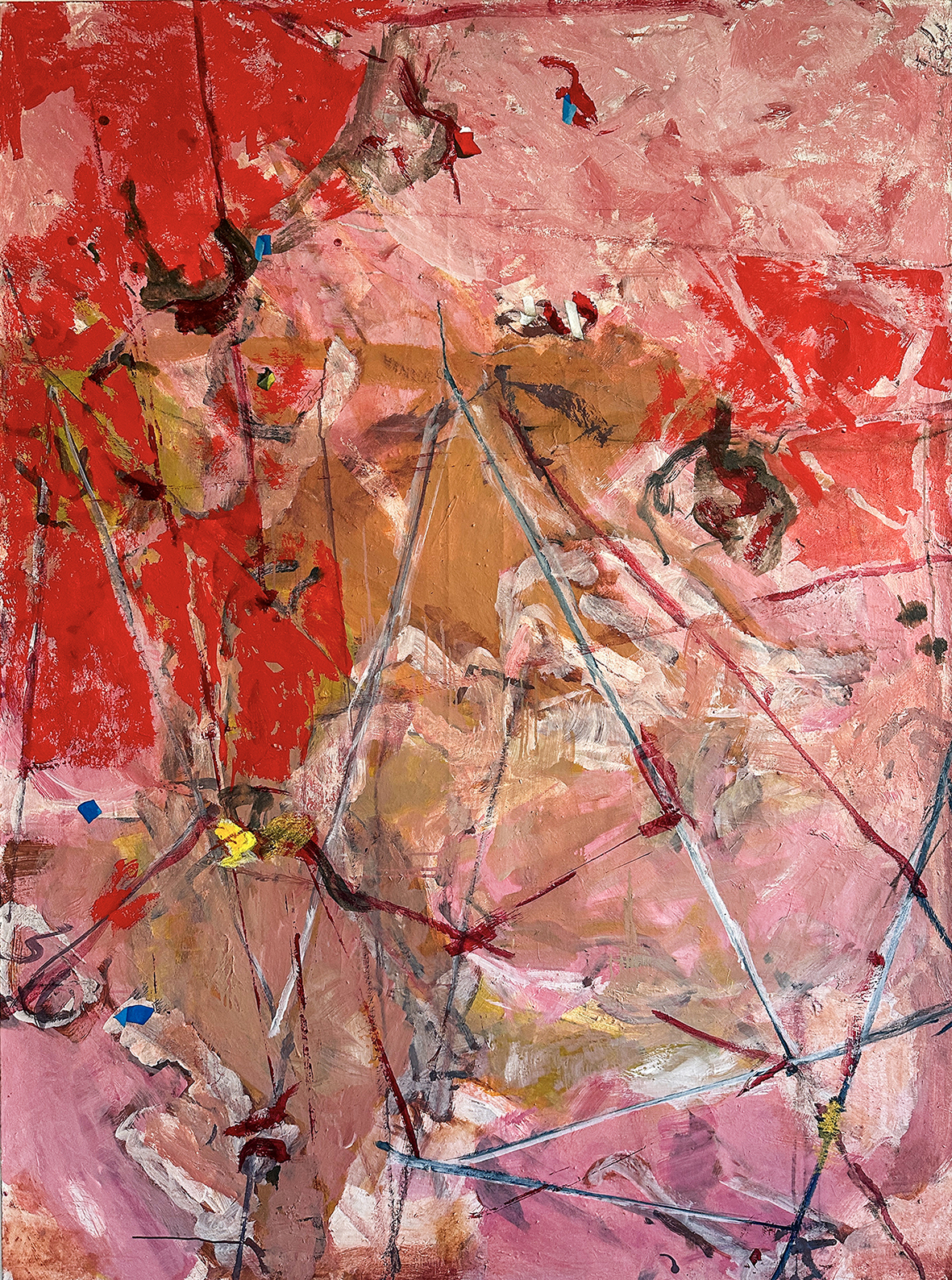
WhiteBox presents a rigorous survey of Natalie Edgar’s compelling and enigmatic 21st-century paintings, an incisive view into the mature force of her abstract vocabulary in which color becomes form, the plane unfolds into active, constructed space, and the painting itself seems to project into the room, asserting its presence beyond the confines of the canvas.
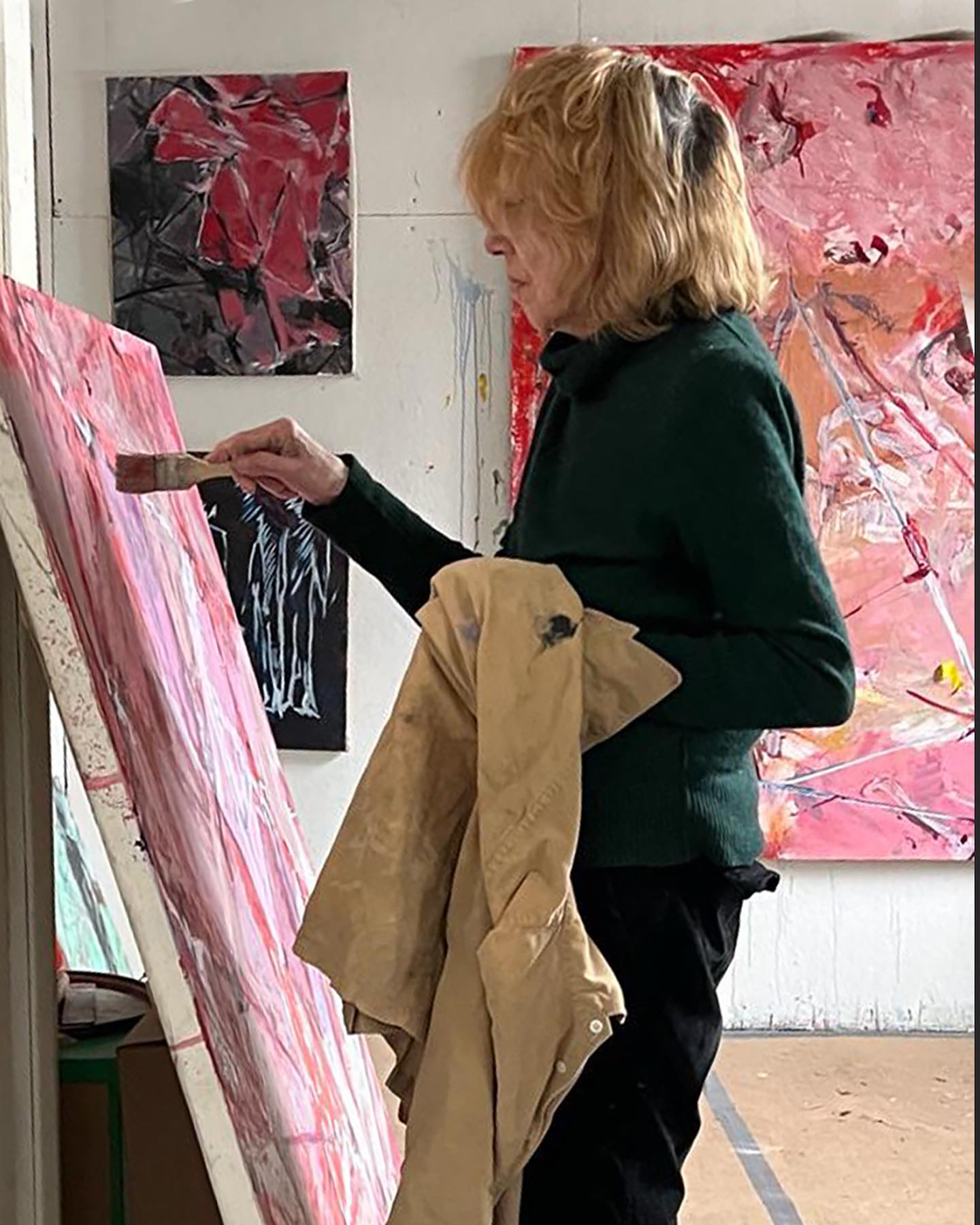
A defining relevance of this exhibition is the first-ever public opening of Edgar’s original Broadway and East 10th Street studio, the site where she produced a substantial body of her work. Situated in the historic heart of downtown New York, an area that served as a crucible for the Abstract Expressionists from the movement’s earliest days, the studio setting allows the exhibition to resonate with the architectural, social, and artistic landscape that shaped Edgar’s formation and long career.
This exhibition is also part of WhiteBox Seminal Artists Series, a program devoted to artists whose work has left a structural imprint on the development of contemporary art. Within this context, Edgar embodies the spirit of the series with exceptional clarity: a painter whose rigorous exploration of color, gesture, and space has decisively expanded the language of abstraction from the mid-twentieth century to the present.
As one of the last living links to the postwar New York School, Edgar continues to reimagine the possibilities of abstract painting with a vitality that defies chronology. This survey celebrates her ongoing commitment to experimentation, structural clarity, and chromatic invention, situating her work within the lineage of Abstract Expressionism while revealing its relevance to the contemporary moment.
In Edgar’s trajectory, painting becomes a continuously expanding territory, an ever-active field where color, gesture, and space strain against one another to produce an image that never fully settles. This survey approaches her work not as a chronological sequence, but as the persistence of a pictorial problem that the artist has explored for more than seven decades: How can one construct a space sustained solely by the energy of color and the internal tensions of the composition?
From her formative years at Brooklyn College under the influence of Rothko and Reinhardt, an education she experienced less as doctrine than as an ethical demand, emerges the principle that anchors her entire oeuvre: painting must be lived from within. The goal is not to represent an external world, but to give form to a state of perception.
This principle is evident in the way Edgar conceives color: not as decoration, nor as atmosphere, but as structure. In her canvases, color does not fill form; color is the form. What appears before us are not represented volumes but chromatic tensions organized as a visual architecture that expands or contracts the depth of the plane.
Throughout her mature practice, especially from the 1970s onward Edgar develops one of her defining formal signatures: the lateral entry into the painting. In many works, a band or rectangle of bare canvas slips in from the edge, interrupting the layered fields of color[1]. This “opening” does not operate as emptiness but as a threshold: a passage through the painting; a shift in point of view; a reminder that the composition is never entirely sealed. It is a space for breath and, simultaneously, a challenge forcing the viewer to look not from the center but from an oblique angle, as if the painting itself were moving faster than the gaze. This seemingly simple gesture encapsulates Edgar’s spatial ambition: to transform the picture plane into an active, vibrating field in continual imbalance, rather than an illusionistic or stable space.
Her gesture is not expressionist in the confessional sense. The brushstroke functions instead as a form of physical thought: blows, displacements, eddies, pockets of calm, sudden eruptions.
There is a corporeal logic to her construction of the canvas that recalls the musicality of the all-over, yet with one essential distinction: the surface never homogenizes.
Each zone obeys a different rhythm, as if the painting were composed in multiple temporalities simultaneously. This produces a recurring sensation in her work: the painting seems to outpace the viewer, as though it were already changing form in the very moment it is seen.
Her decades of travels to Pietrasanta and the Apuan Alps do not make her a painter of landscapes—no mountains appear. What Italy offers is a perceptual shock: the white light of Carrara, abrupt masses of stone, the experience of altitude, and a mineral nature that resists domestication.
These elements emerge not as figuration but as chromatic intensification, as an expanded register of light. In her later works, color becomes sharper, more contrasted; gestures take on the dimension of geological forces plates that push, collide, or part. The mountain is not “represented.” It is transformed into pictorial energy.
In her most recent paintings, including those from 2025, Edgar works with an almost radical concentration. These works reveal an artist who commands her language so thoroughly that she can reduce it without diminishing its complexity—something only achieved in the mature years of major abstract painters. Here, the canvas no longer seeks to affirm anything external: it becomes an autonomous organism, a membrane in which every mark shifts the equilibrium of the whole.
To read this exhibition as a temporal journey is helpful but insufficient. What this survey truly proposes is a recognition of the consistency of a visual inquiry spanning her entire life: How does one create a space generated solely by the internal forces of painting? The answer, if there is one, changes from canvas to canvas.
This is why Edgar’s work does not age: it continues searching, straining the surface, constructing spaces that did not previously exist. She belongs to a historic generation, yes, but her painting is not an archive. It is a living system in perpetual reformulation. This survey not only restores a fundamental voice, but it also actively reinscribes it into the present, reaffirming WhiteBox’s mission to illuminate seminal practices that continue to shape our visual imagination.
[1] Judd Tully, “Abstract Journey: Letters from the Edge,” essay for the Natalie Edgar exhibition at Woodward Gallery, exhibition catalogue, New York, 2014.