“HOUSE ON FIRE”
December 5, 2025
WHITEBOX I PORTABLE
March 5, 2026Curated by Kaylie Pykkonen and Tabitha Haugen
Mentored by Yohanna Magdalene Roa, Curator at Large, WhiteBox
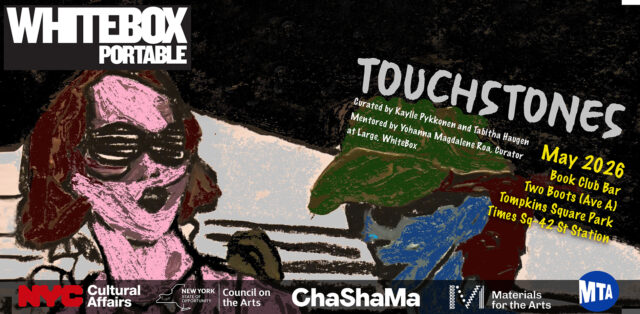
Presented within the framework of WhiteBox Portable, a curatorial model developed by Yohanna Magdalene Roa that treats exhibition-making as situated, relational, and responsive to context, Touchstones extends WhiteBox’s commitment to intersectional, site-aware practice beyond the traditional gallery format. Portable understands space as contingent rather than neutral, shaped by the social and material conditions in which art circulates.
Building on this trajectory, Touchstones emerges as the second curatorial initiative developed within the WhiteBox SIP—Staff & Internship Involvement Program. Following Have a Good One!, this new chapter extends the program’s commitment to collaborative methodology and site-responsive inquiry, shifting from the internal mechanics of exhibition-making toward the lived structures of the city itself.
Curated by Kaylie Pykkonen and Tabitha Haugen, and mentored by Yohanna Magdalene Roa, Curator at Large at WhiteBox, Touchstones investigates the neighborhood as a dynamic system shaped by memory, repetition, and encounter. Grounded in the East Village, Touchstones positions place as dynamic, fluid, and constantly in flux. Rather than understanding the neighborhood as a fixed boundary on a map, this project approaches it as something shaped through time, detail, encounters, and experience. Additionally, in a city shaped by rapid change, displacement, and economic pressure, the neighborhood is never neutral. Artists, activists and migrants have long called the East Village home, though they have not been unthreatened by rising rent and mass corporatization.
Touchstones honors the everyday, minute, and mundane motion that carries our connections to a neighborhood’s true character. Intimate recognition becomes a process built by the subway route we take to work each day, the familiar faces who share our journey but may never exchange a word, and the reliable neighborhood havens that offer sustenance and warmth. Touchstones seeks to elevate the specificity of place and celebrate the people who turn blocks of concrete into a shared beating heart.
Extending from this foundation, the project unfolds across Tompkins Square Park, Two Boots on Avenue A, and the Tompkins Square Library, with a connected exhibition in the Times Sq–42 St subway station. As a citizen of New York, the MTA, pizzeria and local library are foundational and functional spaces, though each takes on its own tangible character over time. These are also spaces where visibility, access, and belonging are continuously negotiated. Our exhibition reflecting on these interwoven qualities will take place May 2–3, and we are calling for a range of work that recognizes both the individual and the collective.
Touchstones invites artists who feel they’ve strongly determined idiosyncratic pathways through NYC. Work may take the form of evanescent installations that depict metaphorical maps and prioritize sustainable sourcing, performances that recreate neighborhood transformations, or visual portraits of local heroes. For the public sections, inspiration stems from ephemeral and thought-provoking interventions such as David Hammons’ Bliz-aard Ball Sale, or the temporary drawings honoring fallen firefighters through Tape Art by Michael Townsend, recently featured in the film Secret Mall Apartment. Additionally, as Lotty Rosenfeld’s NO+ inscriptions called for public resistance in 1970s Chile, Touchstones seeks to promote civic unity toward a stronger future. Politically engaged work that strengthens the community is central to the exhibition, whether through installation or other forms. The exhibition understands public space as contested, shared, and actively constructed.
Performances will take place outdoors, and artists should be prepared to adapt to the lively atmosphere of the park in spring. Touchstones welcomes musicians, poets, playwrights, and interactive artists who consider the neighborhood formative to their New York City livelihood. Those aiming to host a workshop may do so in the Tompkins Square Library or the park. Workshops should activate the community through writing or conversation, collective making, or resource and knowledge sharing through study-ins and presentations. Finally, Touchstones will showcase visual works that depict neighborhood portraits, conceptual maps, or emotional and economic shifts over time. Displayed in Two Boots and the Tompkins Square Library, works should be relatively small-scale and able to fit within a case, on a shelf, or on a wall. Installations may also be considered, provided they do not disrupt normal operations.
Ultimately, Touchstones seeks to honor the diverse individuals and spaces that make this city a vital force. We look forward to reviewing your submissions. Please reach out with any questions.
TOUCHSTONES — Program Calendar
| Friday, May 1 |
4:00–5:00 PM Performance / Activation — Zach Riddle Location: [TBC] 5:00 PM – 6:00 PM Billy Walden, Spider plant propagation workshop, participatory installation |
| Saturday, May 2 |
| 10:00–11:00 AM Participatory Embroidery Workshop (Session 1) — Julia Justo Location: Book Club Bar |
| 2:00–6:00 PM Exhibition Open — Two Boots (Ave A) Apfelbaum, De Castro, Green |
| 2:00–6:00 PM Outdoor Installations — Tompkins Sq Park Palmer, LaFosse, Pappa |
| 4:00 PM Copperhead Talk — Castrucci (Steelwool) Tompkins Sq Park |
| Sunday, May 3 |
| |
| 2:00–6:00 PM Exhibition Open — Two Boots (Ave A) |
| 2:00–6:00 PM Outdoor Installations — Tompkins Sq Park Palmer, LaFosse, Pappa |
| 2:00–5:00 PM Embroidery Workshop (Session 2) — Julia Justo Tompkins Sq Park |
ARTISTS
Julia Justo – Workshop
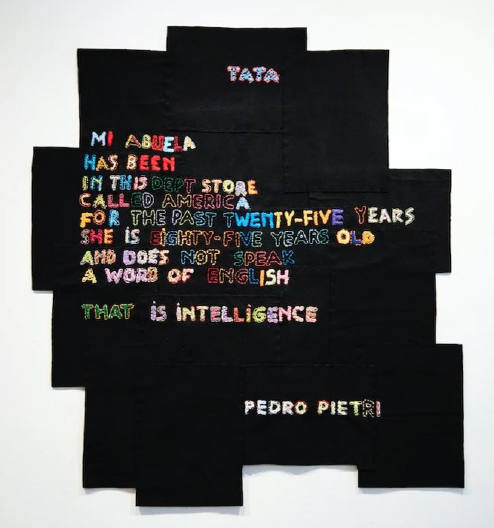
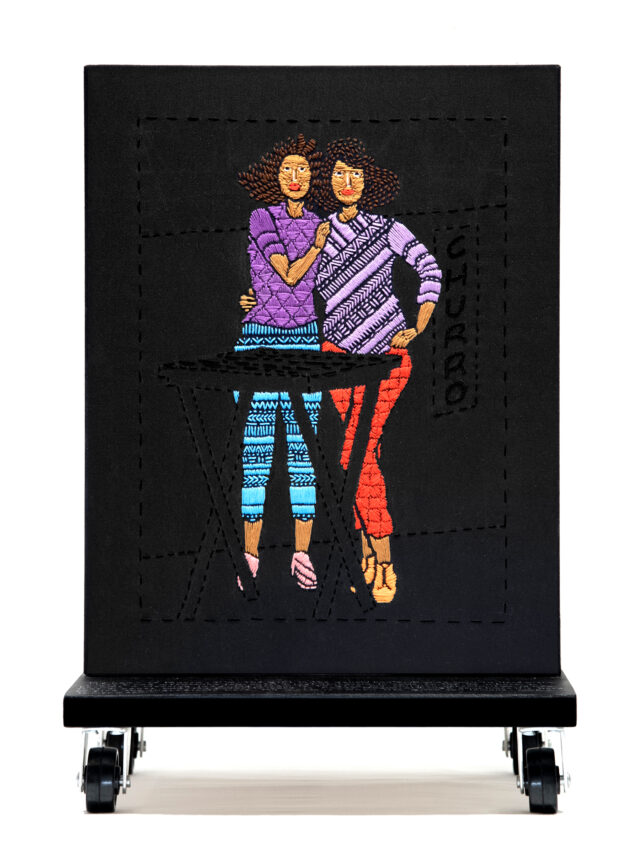
Participatory community embroidery, 40 × 40 inches, 2026.
Developed through a series of workshops, this collaborative textile invites participants to translate handwriting into stitched form. Using embroidery as a method of inscription, individual words and phrases of personal significance are rendered by hand and integrated into a growing communal surface. The work accumulates as a collective archive of voices, foregrounding themes of migration, memory, and shared authorship while positioning textile practice as both metaphor and material for interdependence.
Andrew Castrucci (Steelwool)
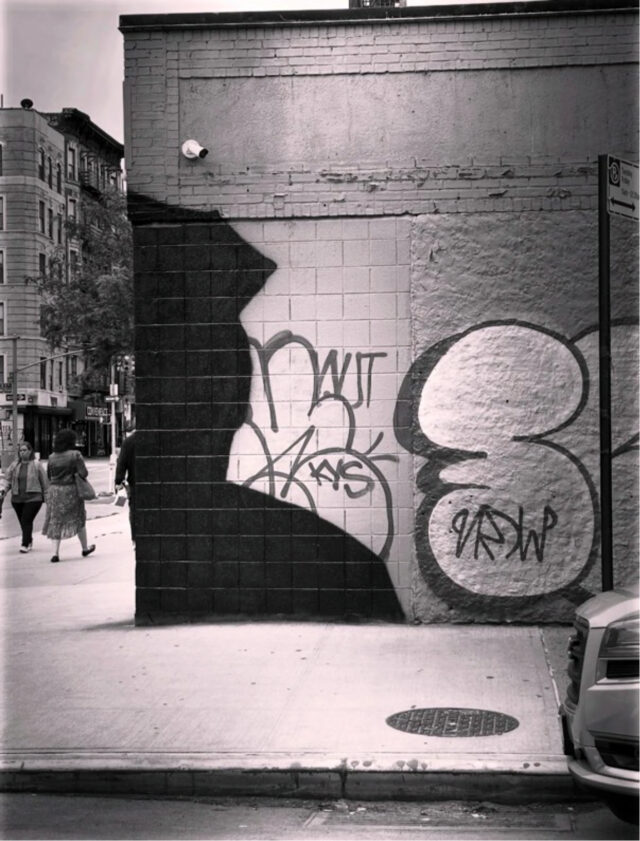
Copperhead, guerrilla public intervention, 2025 (ongoing since 2020).
Copperhead is a guerrilla intervention initiated in response to the George Floyd protests and the expansion of state surveillance. The recurring dark figure, reproduced across urban surfaces, operates as an ambiguous symbol, read alternately as threat or protection. The work examines public perception under conditions of increased policing, while situating itself within the artist’s long-standing engagement with housing activism and the East Village squatter movement.
Angelique De Castro
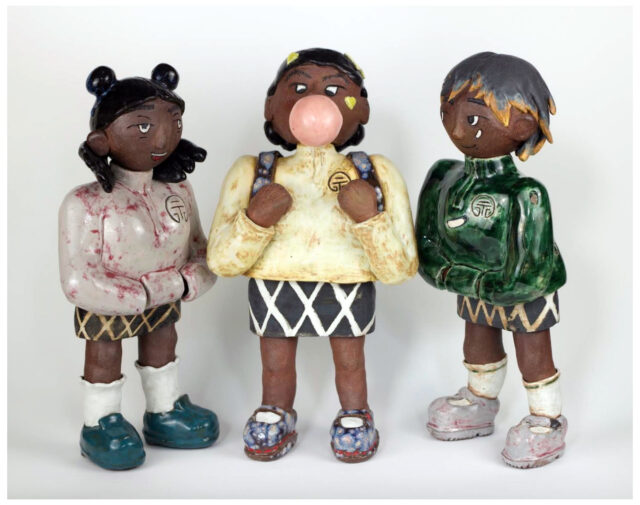
Gossip Girls, sculpture/installation, 15.5 × 17 × 10 inches, 2025.
This work reimagines diasporic Southeast Asian identity through speculative narrative. Depicting three students in a reconfigured spiritual context, the piece proposes an alternative cosmology rooted in indigenous Philippine belief systems rather than Catholic doctrine. Incorporating references to Bathala and Baybayin script, the work examines memory, religion, and cultural displacement, using figurative forms to critique inherited systems of belief and authority.
Donyé Green
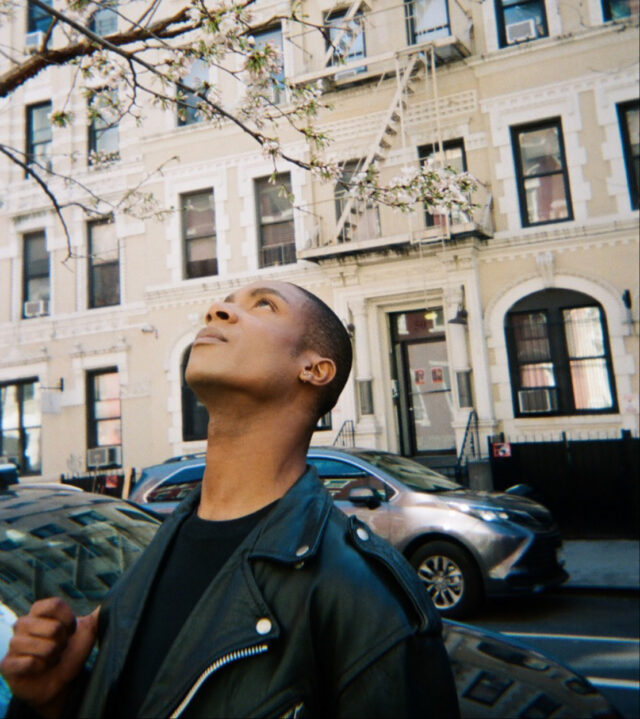
The (In)Disposable Project, photography with participatory text component, variable dimensions, 2026.
This photographic study examines constructions of worth and the performance of identity through dual modes of self-presentation: “Amor,” the version shaped for social navigation, and the “actual,” an unguarded articulation of selfhood. Each portrait is accompanied by handwritten responses addressing value, desire, and legacy. Distributed across multiple sites, the work extends into a participatory framework, inviting viewers to contribute their own reflections, thus shifting spectatorship into collective self-inquiry.
Avalon LaFosse
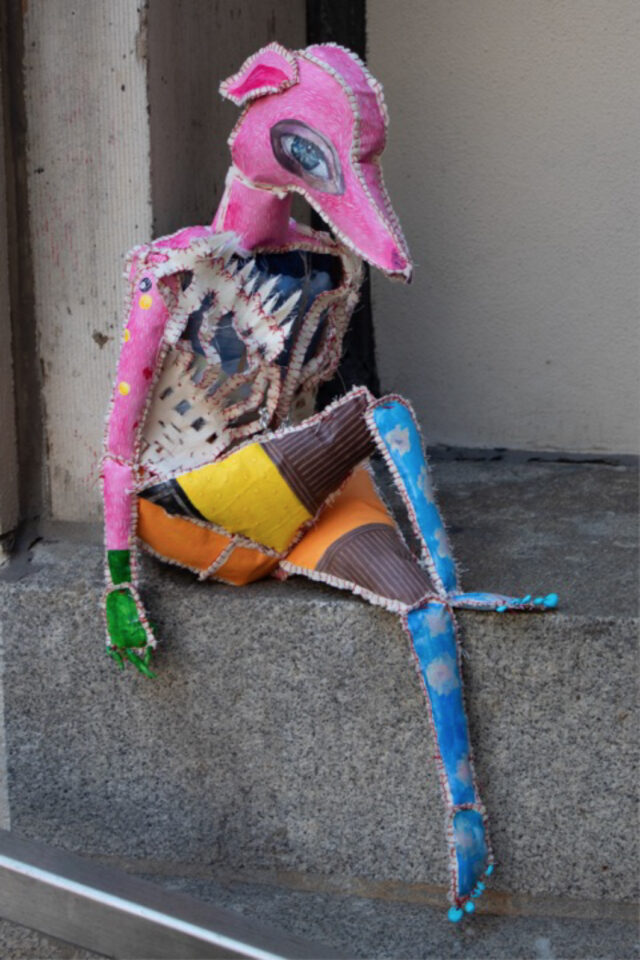
Avi in the East, muslin, thread, acrylic paint, oil paint, clay, silver leaf, doll stuffing, 27 × 7 × 1.5 inches, 2026.
A hand-sewn and painted sculptural figure, Avi in the East functions as an embodied archive of lived experience in the East Village. Each embedded motif corresponds to a specific memory, translating personal narrative into material form. The work positions the body as a repository of accumulated moments, articulating identity as layered, constructed, and continuously in formation.
Sally Apfelbaum
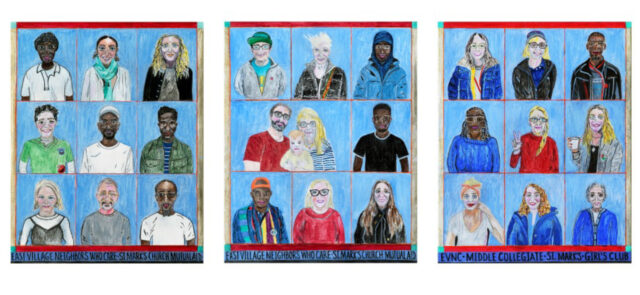
Chronicle of a Moment: West Africa Comes to the East Village, five paintings, acrylic on canvas, each 20 × 16 inches, 2025–2026.
This series documents a mutual aid network supporting West African immigrants in the East Village. Portraying volunteers across diverse professions, the paintings register a collective response to displacement through acts of care, labor, and solidarity. The work operates as both record and tribute, foregrounding community-based infrastructures that emerge in response to systemic gaps.
Ashley Palmer
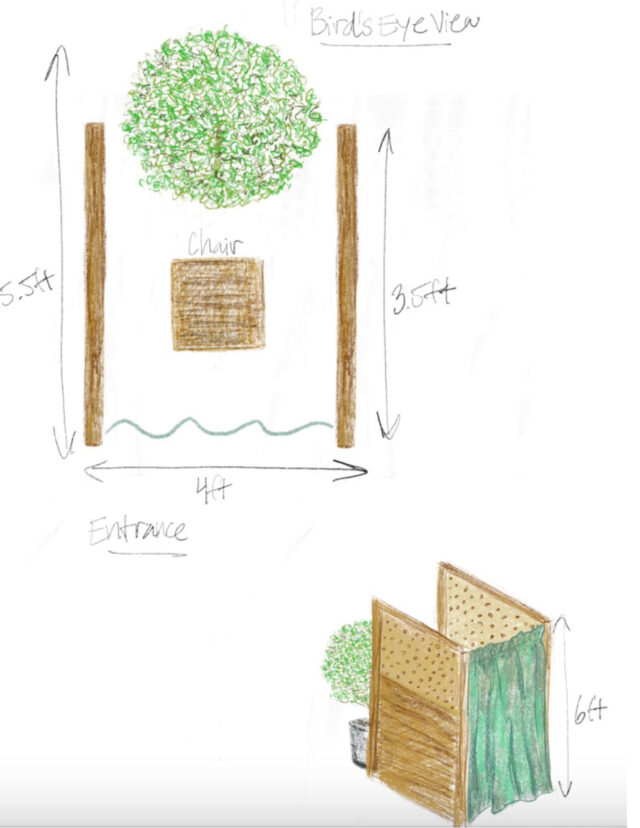
Bush Confessional, participatory installation, variable dimensions, 2026.
This installation reconfigures the structure of the Catholic confessional by replacing the priest with a living bush, repositioning nature as a site of reflection and release. Participants are invited to engage privately with the work, producing a space for stillness within the overstimulated urban environment. Addressing unequal access to rest and green space, the piece reframes relaxation as a contested social condition while proposing alternative forms of connection outside institutional frameworks.
Marita Pappa
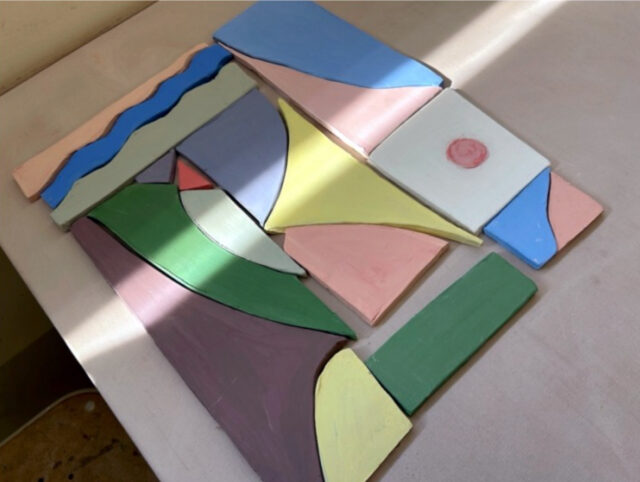
Ceramic tile installation (modular map), underglaze on white clay, 16 × 20 inches, 2026.
Derived from an extended period of walking-based research, this modular ceramic work translates routes through Lower Manhattan into a reconfigurable spatial system. Viewers are invited to rearrange the tiles, generating shifting pathways and narratives. The piece challenges fixed notions of urban organization, proposing instead a city shaped by movement, memory, and subjective experience.
Zach Riddle
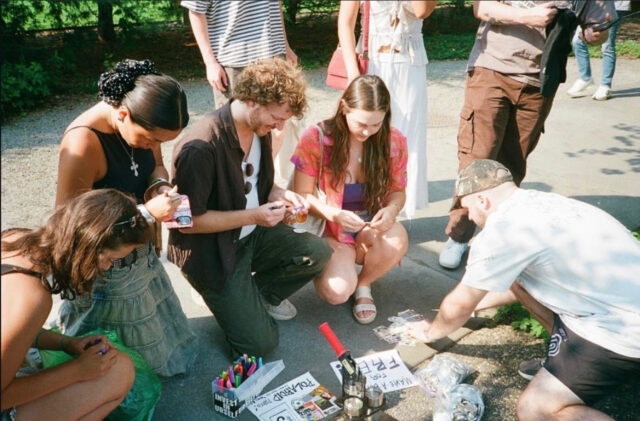
Button-making workshop, participatory, variable dimensions, 2026.
This workshop invites participants to transform hand-drawn images into wearable buttons, emphasizing accessibility and self-production. Rooted in community-based making, the project foregrounds creative autonomy while extending the artist’s broader commitment to grassroots distribution and the democratization of artistic tools.
Billy Walden
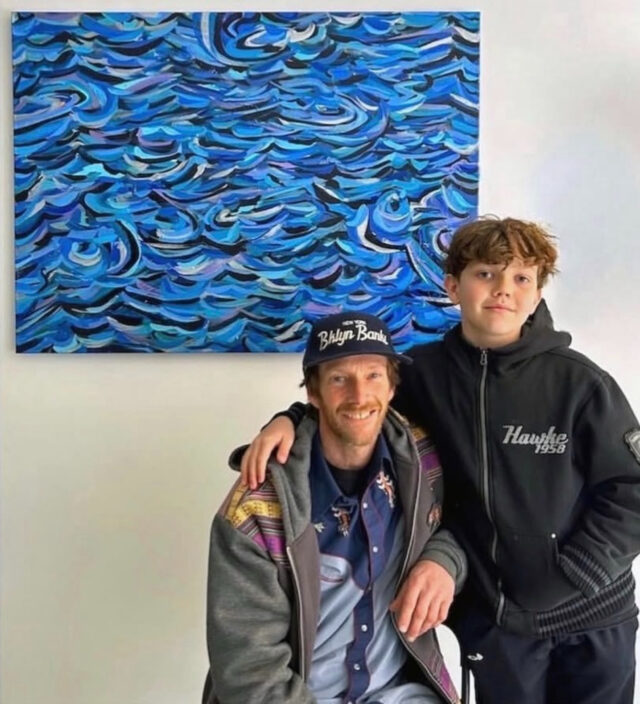
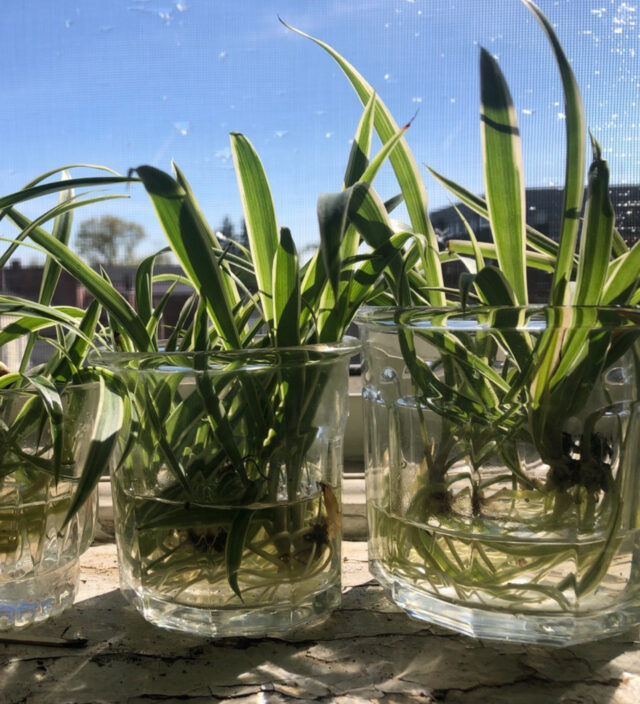
Spider plant propagation workshop, participatory installation, variable dimensions, 2026.
Centered on the propagation of spider plants, this workshop examines processes of growth, reproduction, and environmental adaptation within urban contexts. Participants transplant rooted cuttings into soil, engaging directly with cycles of care and sustainability. The work frames plant life as a model for resilience and ecological interdependence within constrained environments.
Daniel Rothbart
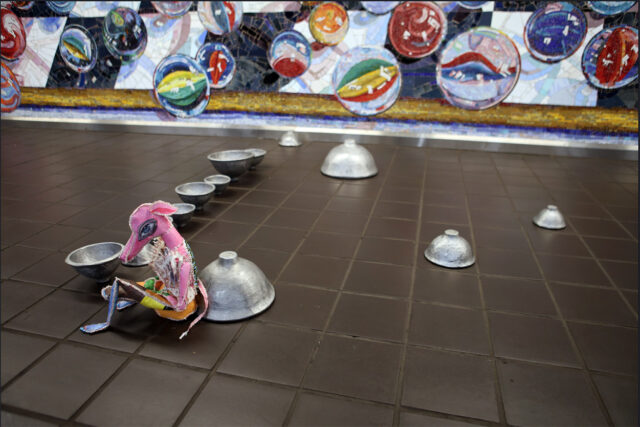
Meditation | Mediation project
Much of Daniel Rothbart’s oeuvre focuses on collaborations with international artists who conceive and realize performance work with his sculptural objects. The resulting performances are documented with video. As part of his Meditation | Mediation project, Rothbart invites artists, poets, musicians, composers, and dancers to collaborate with him on short performances that engage with his vessel sculptures. These works probe boundaries of communication, question cultural stereotypes, and explore reflexive and meditative approaches to artmaking.